Diabetes and arthritis are two of the most common chronic conditions affecting Brisbane adults, and both have a direct and significant impact on foot health. Diabetic neuropathy, poor circulation, and arthritic joint changes each create specific vulnerabilities in the foot and lower limb that require professional assessment and ongoing management.
At Expert Foot Care, our senior podiatrists bring over 15 years of experience to the assessment and treatment of patients managing chronic illness. We work with diabetic patients, arthritis sufferers, and those with related vascular conditions to protect foot health, reduce complications, and maintain mobility and quality of life. If you are managing a chronic condition and have not yet had a comprehensive foot assessment, this guide explains why that assessment matters and what it involves.
How Chronic Conditions Affect Your Feet
Foot health is directly influenced by systemic health. Conditions that affect circulation, nerve function, immunity, or joint integrity all have downstream effects on the foot and lower limb. Understanding those connections is fundamental to managing them effectively.
- Diabetes and Foot Health
Diabetes affects the feet through two primary pathways: peripheral neuropathy and peripheral vascular disease. Neuropathy reduces sensation in the feet, meaning cuts, blisters, pressure sores, and infections may go unnoticed until they are already serious. Poor circulation slows wound healing and increases the risk of infection spreading rapidly.
The consequences of unmanaged diabetic foot complications can be severe. Regular podiatric assessment is the most effective tool for identifying early warning signs, monitoring changes over time, and implementing the interventions that prevent minor issues from escalating. Our diabetic foot care assessments in Brisbane are structured around this principle: find problems early, address them promptly, and educate patients to protect their feet between appointments.
- Arthritis and Foot Pain
Arthritis affects the joints, and the foot contains 33 joints, making it one of the most commonly affected areas of the body. Osteoarthritis, rheumatoid arthritis, and gout each present differently in the foot and require different management approaches.
Osteoarthritis involves the gradual breakdown of cartilage in weight-bearing joints, most commonly the big toe joint and the midfoot. Rheumatoid arthritis is an autoimmune condition that causes inflammation across multiple joints simultaneously, often producing swelling, deformity, and significant pain in the feet. Gout is a form of inflammatory arthritis caused by uric acid crystal deposits, typically affecting the big toe joint with sudden, intense pain and swelling.
Our podiatrists assess arthritic foot pain in the context of each patient’s specific condition, health history, and functional goals. Treatment plans prioritise conservative management before any more complex intervention is considered.
- Peripheral Vascular Disease
Peripheral vascular disease reduces blood flow to the lower limbs, creating a range of foot health risks including slow-healing wounds, skin changes, and increased infection susceptibility. Our podiatrists use Doppler ultrasound assessment to evaluate blood flow to the feet, providing a clear clinical picture of vascular health that informs both our treatment approach and our collaboration with other healthcare providers.
Diabetic Foot Care: What Regular Assessment Involves
A diabetic foot assessment at Expert Foot Care is comprehensive and structured. It is not a quick visual inspection. Each assessment is designed to identify the full range of risk factors relevant to a diabetic patient’s foot health.
A thorough diabetic foot assessment includes:
- Neurological testing – assessing sensation using monofilament testing and vibration perception to identify neuropathy and grade its severity
- Vascular assessment – Doppler ultrasound to evaluate blood flow and identify signs of peripheral arterial disease
- Dermatological review – examining skin integrity, hydration, callus formation, and any areas of breakdown or ulceration
- Nail assessment – reviewing nail health, thickness, and any signs of infection or structural change that could create pressure wounds
- Footwear review – identifying pressure points, inadequate cushioning, or fit issues that create risk in the context of reduced sensation
Following the assessment, your podiatrist discusses the findings clearly, explains your risk level in straightforward terms, and recommends a care schedule appropriate to your individual circumstances. For patients in Ashgrove, Alderley, Enoggera, and surrounding Brisbane suburbs, our clinic provides accessible, ongoing diabetic foot management with continuity of care from the same experienced podiatrist.
Diabetic foot risk is clinically stratified. Low-risk patients typically benefit from an annual assessment. Patients at moderate or high risk require more frequent review, commonly every three to six months. Your podiatrist will determine the appropriate schedule after your initial assessment and review it over time as your health status changes.
Managing Arthritic Foot Pain: What Our Podiatrists Recommend
Arthritic foot pain responds well to a combination of approaches tailored to the specific type and severity of arthritis, the joints affected, and the patient’s activity level and goals. Conservative management is always the starting point.
Options our podiatrists commonly recommend include:
- Custom orthotics – prescribed to redistribute load away from affected joints, reduce pain, and improve function. For patients with rheumatoid arthritis or osteoarthritis affecting the midfoot or forefoot, custom orthotics can significantly improve daily comfort and walking capacity.
- Footwear advice – appropriate footwear is critical in arthritis management. Shoes with adequate depth, cushioning, and support reduce the compressive forces on arthritic joints and can be modified to accommodate structural changes.
- Targeted therapeutic exercises – specific exercises to maintain joint mobility, strengthen supporting musculature, and slow the progression of deformity.
- Padding and offloading: localised padding and strapping techniques to reduce pressure on specific joints or bony prominences during daily activities.
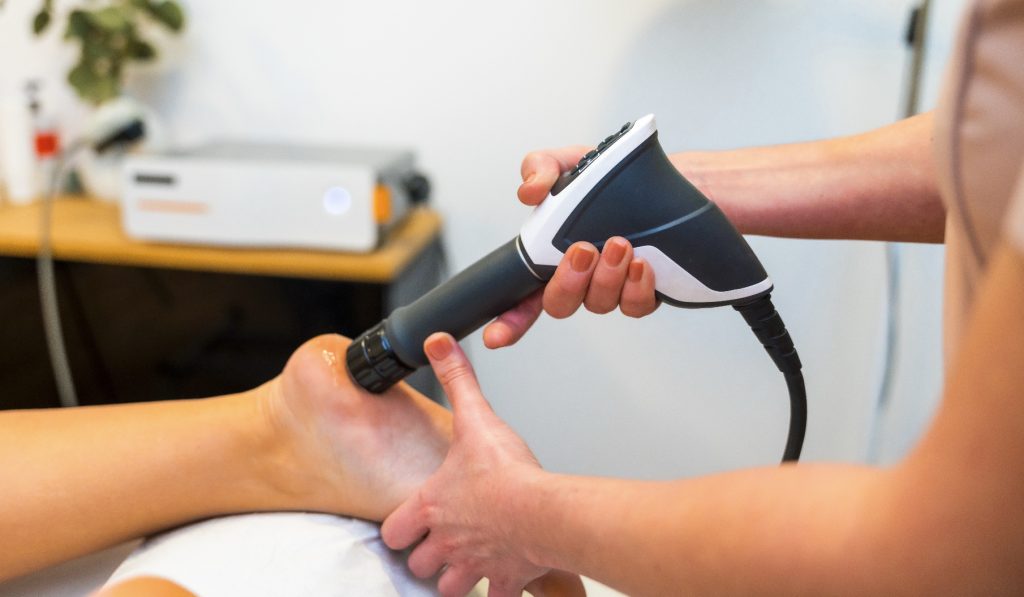
- Shockwave therapy – for chronic arthritic pain associated with tendon involvement or soft tissue inflammation, shockwave therapy can provide meaningful pain relief and support tissue healing.
Our podiatrists assess the contributing biomechanical factors in every arthritic presentation. Addressing the mechanics of the foot reduces load on affected joints and slows the progression of deformity over time.
Laser Therapy for Chronic Pain and Inflammation
Laser therapy is an effective treatment option for chronic foot and lower limb pain associated with both diabetic complications and arthritis. At Expert Foot Care, laser therapy is used specifically for pain reduction, increased tissue repair, and healing.
For arthritic patients, laser therapy reduces localised inflammation and pain in affected joints, supporting improved mobility and daily comfort. For patients with diabetic foot complications involving tissue damage or slow-healing wounds, the tissue repair and healing properties of laser therapy support recovery alongside conventional wound management.
Your podiatrist will assess whether laser therapy is appropriate for your specific condition and explain the treatment process clearly before any sessions begin.
Preventive Care and Patient Education
Prevention is central to managing chronic illness effectively. Our podiatrists invest genuine time in educating every patient about the daily habits and monitoring practices that protect foot health between appointments.
For diabetic patients, this education covers daily foot inspection, appropriate skin and nail care, footwear selection, and the specific warning signs that require immediate professional attention. For arthritis patients, guidance focuses on activity modification, joint protection strategies, appropriate footwear, and how to monitor changes in joint function and pain levels over time.
This educational component is not an afterthought. It is a core part of how Expert Foot Care supports patients in taking an active role in their own foot health management, which is where the most meaningful long-term gains are made.
Working With Your Healthcare Team
Chronic illness management involves multiple healthcare providers, and clear communication between them produces better outcomes for patients. Our podiatrists work closely with GPs, endocrinologists, rheumatologists, vascular surgeons, physiotherapists, and wound care nurses to ensure a coordinated approach to each patient’s care.
For diabetic patients, this collaboration is particularly important. Our assessment findings are communicated back to the patient’s GP and specialist team where relevant, contributing to the broader picture of diabetes management and flagging vascular or wound care concerns that require multidisciplinary input.
For arthritis patients, working alongside rheumatologists and physiotherapists ensures that podiatric interventions complement the broader management plan rather than operating in isolation.
Chronic Illness Foot Care for Older Adults
Our team are experts in treating the 55+ demographic, and chronic illness is significantly more prevalent in this age group. Diabetes and arthritis both become more common as we age, and the foot health challenges they create are compounded by age-related changes, including reduced fat padding in the heel and ball of the foot, slower wound healing, decreased circulation, and increased skin fragility.
Older adults managing chronic illness have a particularly strong reason to prioritise regular podiatric care. Minor foot issues that might resolve quickly in a younger patient can escalate rapidly in an older adult with compromised circulation or reduced sensation. Early identification and prompt management are both more critical and more impactful in this group.
Our Brisbane clinic serves older adults across Ashgrove, Alderley, Enoggera, and surrounding suburbs, providing experienced, accessible care that takes the full context of each patient’s health into account. We do not apply a standard protocol to older patients. Every assessment is individual, and every plan reflects the specific health status, mobility goals, and circumstances of the person in front of us.
What to Expect at Your First Appointment
Many patients with chronic illness delay podiatric care because they are unsure whether their foot symptoms are significant enough to warrant an appointment, or they are uncertain about what the process involves.
Our first appointments are thorough, unhurried, and free of pressure. Your podiatrist will take time to understand your health history, current symptoms, and daily demands before conducting the physical assessment. Findings are explained in plain language. Recommendations are discussed openly, with clear reasoning provided for each suggestion.
We do not recommend treatments before we fully understand your individual picture. Every plan is personalised and agreed on collaboratively before anything proceeds.
New patients are welcome to ask about our complimentary comprehensive foot health assessment when booking. Call us on [PHONE NUMBER] to find out more.
Book a Chronic Illness Foot Assessment in Brisbane
Foot health is not a secondary concern for patients managing diabetes or arthritis. It is a direct component of overall health management, and leaving it unaddressed increases the risk of complications that are far more difficult to treat than the conditions that precede them.
At Expert Foot Care, our senior podiatrists assess thoroughly, communicate clearly, and develop personalised plans that reflect each patient’s individual circumstances. We take a conservative, evidence-based approach and work alongside your broader healthcare team throughout your care.
New patients are welcome to ask about our complimentary comprehensive foot health assessment when booking.
📞 Call us on (07) 3256 8638
🌐 Book online at expertfootcare.com.au
📍 Serving Ashgrove, Alderley, Enoggera, Everton Park, Stafford, Wilston and surrounding Brisbane suburbs